
In the B2B world, selecting the right revenue strategy can feel like a high-stakes decision. While inbound marketing overflows with promises of organic growth, outbound can shine with its ability to deliver quick, targeted wins. But here’s the hard truth: neither approach is a cure-all, and choosing one without considering the other can put a serious cap on your growth potential.
Too many companies find themselves tethered to one side, either investing all-in on inbound content creation or pushing all efforts into outbound outreach. But why put all your eggs in one basket when your revenue engine could run more effectively with a blend of both?
At the heart of the decision lies your company’s unique Ideal Customer Profile (ICP), industry, and stage of growth. Let’s dive into these two core strategies to unpack what they can (and can’t) do for your bottom line.
Inbound and Outbound: The Power and Pitfalls of Each Strategy
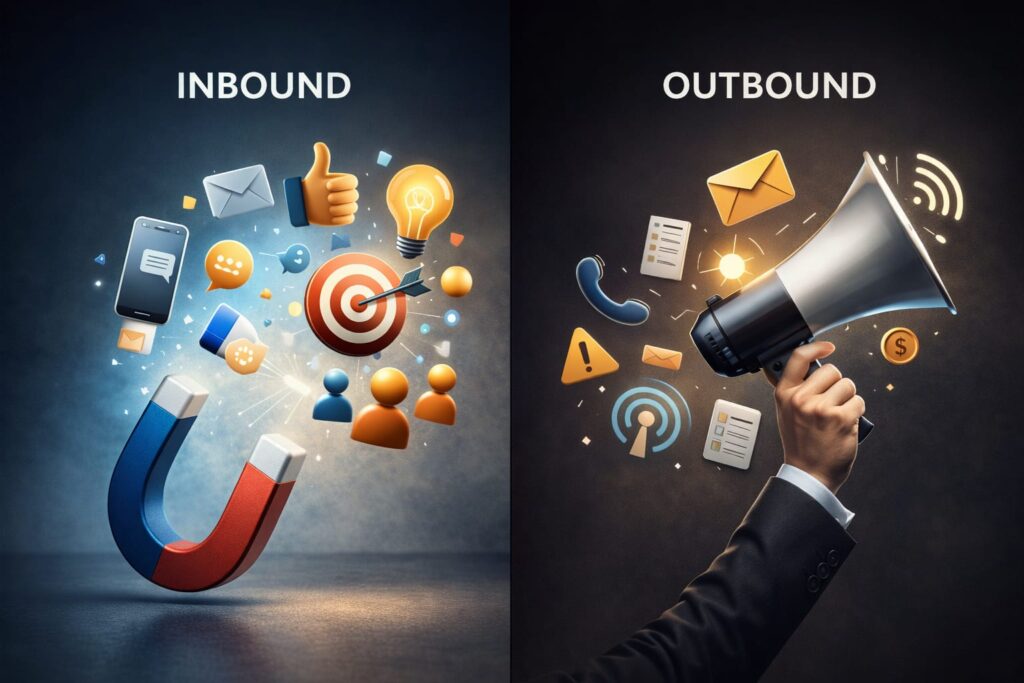
Inbound and outbound are often pitched as either/or, yet in practice, they serve complementary roles. But which should take the lead in your strategy?
- Inbound Marketing is often hailed as the more “natural” approach, where you create valuable content that brings customers to you. Think of inbound as the trusted friend who’s known for good advice—your potential buyers seek you out because they see value in what you offer. Channels like blogs, SEO, social media, and webinars create that steady flow of discovery.
But here’s the reality check: inbound can be slow. If your strategy is purely inbound, you’re in for the long game—and that’s not always ideal if revenue needs are urgent or if you’re looking to break into a new market quickly.
- Outbound Marketing is more direct, more proactive. Rather than waiting for customers to find you, outbound allows you to reach out to high-value prospects, opening doors to conversations on your terms. With outbound, you’re essentially knocking on doors (hopefully with targeted messaging and data-driven precision), a tactic that B2B companies have leveraged to close high-value accounts for years.
However, outbound can come with a high price tag. There’s a risk of burnout for prospects who are bombarded with ads, cold calls, and emails—and for your team, a constant need for careful targeting, testing, and follow-up.
So, Which Approach Is “Better”?
Here’s a perspective worth considering: relying solely on either inbound or outbound strategies can limit your growth potential. The right approach often lies in finding a balance that’s shaped by your ICP, industry, and where your company is in its growth journey.
Each strategy has its strengths, and both can play a vital role at different stages:
If your company is in the early stages or operating in a competitive, fast-moving market, outbound might offer the speed needed to build initial momentum. Direct outreach helps newer brands cut through the noise, and proactive engagement can put you in front of prospects before they know they need you. However, inbound can still lay a foundation here, establishing credibility and brand presence for the long term.
For industries that require high levels of trust and have longer sales cycles, inbound can be particularly valuable. Thought leadership content like blogs, webinars, and social media helps build trust, positioning your company as a go-to resource over time. That said, some well-placed outbound efforts—like account-based marketing for key prospects—can accelerate growth even in these slower cycles.
For mature companies with solid brand recognition, a mixed approach often brings the best results. Inbound nurtures your audience, keeping you top of mind and engaging warm leads who are already familiar with your brand. Meanwhile, outbound can help you strategically target high-value accounts that align with your ICP, allowing you to pursue key growth opportunities.
Still not sure which one you should prioritize?
Most companies struggle with inbound vs outbound because the real issue is not channels, it is clarity.
At Vaneco, we help founder-led companies define their ICP, sharpen their positioning, and build a revenue strategy that uses inbound and outbound together.
Learn how the Revenue Accelerator Program helps teams build predictable revenue without guessing.
Finding the Right Mix for Your ICP and Business Goals
At the end of the day, this choice isn’t just about strategy; it’s about precision. A well-defined ICP should guide which approach to emphasize. If you know who your best customers are, then choosing inbound, outbound, or both becomes a matter of matching your efforts to your audience’s needs and preferences.
Here’s the framework we recommend for striking that balance:

Define Your ICP and Personas First:
Skipping this step is like building a house without a blueprint.
Who are your highest-value customers?
What channels do they use?
Knowing this allows you to tailor both inbound content and outbound messaging to align with where and how your buyers prefer to engage.

Make Budget Decisions Realistically:
Inbound content takes time and patience to see results but often has a high ROI over the long term.
Outbound can deliver faster wins but can be resource-intensive. Allocate your budget where it makes the most sense for both short- and long-term objectives.

Set Up Feedback Loops:
If your inbound and outbound efforts aren’t talking to each other, you’re missing a major opportunity.
Feedback loops can transform insights from each strategy into actionable improvements for the other—what are the top pain points prospects mention in outbound calls, and how can those insights enhance inbound content?
A Pragmatic Take: Don’t Choose. Adapt.
The reality is that in a fast-changing B2B environment, being locked into one strategy is a risk. Flexibility isn’t just a buzzword—it’s a strategic advantage. A balanced approach gives you the agility to shift gears as your market changes and your company grows.
Inbound and outbound are no longer opposing forces; they’re complementary tools that work better together than apart. By strategically blending them, companies can create a more holistic approach to revenue generation, one that supports sustainable growth and fosters stronger customer relationships.
FAQ: Inbound vs Outbound in B2B
Is inbound or outbound better for B2B?
Neither is universally better. The right choice depends on your ICP, market, and growth stage.
Can inbound replace outbound in B2B sales?
In most cases, no. Inbound supports outbound but rarely replaces it entirely, especially in early stages.
When should a company start outbound sales?
When the ICP is clear and the team can handle real conversations consistently.
Is inbound marketing too slow for startups?
Inbound can be slow initially, which is why many startups use outbound to create early momentum.
Should inbound and outbound be run together?
Yes. The strongest B2B revenue strategies combine both with clear roles and alignment.
Ready to get started? Our Revenue Accelerator Program is here to guide you in building a revenue strategy that aligns with your unique goals, ensuring every step you take brings you closer to sustainable growth.