
In B2B revenue generation, measuring the return on investment (ROI) of your strategies is essential. Understanding what’s working—and what isn’t—empowers you to allocate resources more effectively, refine your tactics, and maximize revenue growth. Whether you’re focused on inbound efforts like content marketing or outbound strategies like email outreach and account-based marketing (ABM), clear metrics and methods are key to understanding their impact.
This article outlines actionable ways to calculate ROI, track the full revenue impact of your efforts, and strike a balance between short- and long-term gains.
What is ROI, and Why Does It Matter?
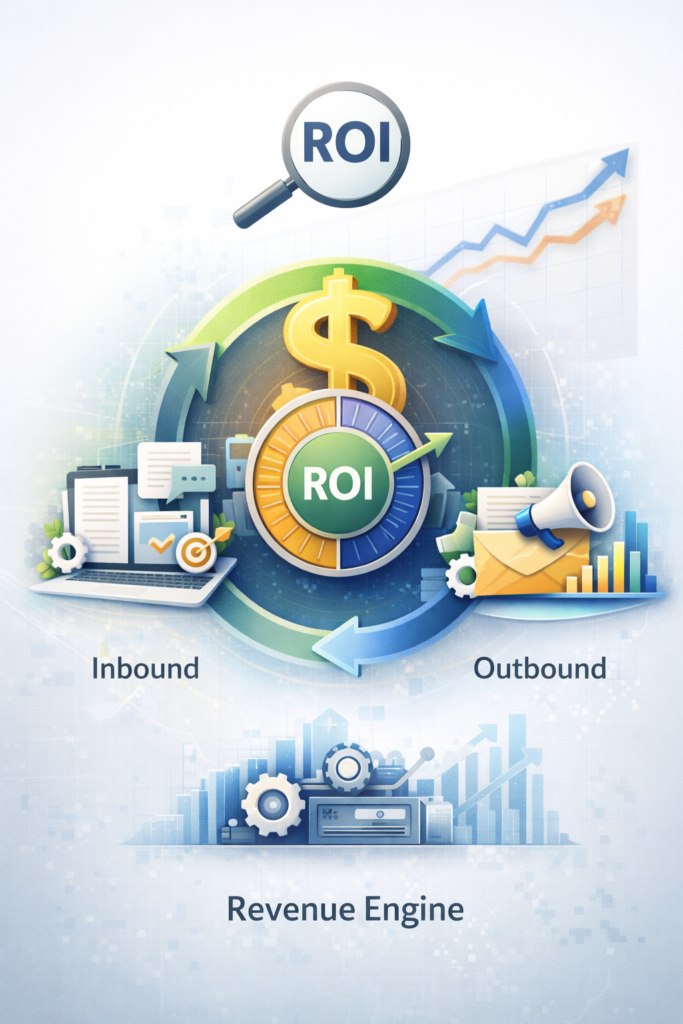
ROI measures the profitability of your strategies relative to their costs. It answers the critical question: Are our efforts generating more revenue than they cost?
For inbound and outbound strategies, ROI goes beyond immediate returns; it reflects the effectiveness of your overall revenue engine. Calculating ROI helps:
- Identify high-impact tactics so you focus on what drives the most value
- Optimize budget allocation so you can invest more in strategies that deliver strong results and adjust underperforming ones
- Demonstrate success and provide stakeholders with concrete evidence of what’s working
Key Metrics for Measuring ROI in Inbound and Outbound Strategies
The first step in calculating ROI is understanding which key performance indicators (KPIs) to track. These metrics vary between inbound and outbound strategies but often complement one another.
Example of Inbound KPIs
Website traffic: measures how many people are visiting your site, often a leading indicator of inbound success.
Content engagement: tracks downloads, time spent on page, or video watch rates. These metrics reflect the effectiveness of your content in engaging prospects.
Lead conversion rates: measures the percentage of website visitors who turn into leads through form submissions, chat interactions, or email signups.
Customer Acquisition Cost (CAC): the total cost of acquiring a customer through inbound channels, including content production, SEO, and social media.
Example of Outbound KPIs
Response rates: tracks how many prospects respond to your outreach emails, LinkedIn messages, or cold calls.
Meeting booked rates: measures how many responses lead to scheduled calls or demos, a critical metric for assessing outbound effectiveness.
Close rates: reflects the percentage of outbound-generated opportunities that result in closed deals.
Pipeline value: tracks the total potential revenue from opportunities created through outbound efforts.
Step 1: Calculating ROI for Inbound and Outbound
Once you have your metrics, use the ROI formula to assess the profitability of your efforts:
ROI = (Revenue Generated – Cost of Strategy) ÷ Cost of Strategy
Example for Inbound:
- Revenue generated from inbound leads: $50,000
- Cost of producing content, running SEO, and promoting content: $15,000
- ROI: ($50,000 – $15,000) ÷ $15,000 = 2.33 (or 233%)
Example for Outbound:
- Revenue from outbound deals: $75,000
- Cost of sales tools, outreach campaigns, and rep time: $25,000
- ROI: ($75,000 – $25,000) ÷ $25,000 = 2.0 (or 200%)
Step 2: Tracking the Full Revenue Impact
ROI calculations are often limited to direct conversions, but inbound and outbound strategies often influence each other. Here’s how to track the full impact:

Attribute revenue across channels:
Use tools like CRMs to track the buyer journey. For example, an outbound email might initiate interest, while inbound content seals the deal. Allocate credit proportionally.

Monitor multi-touch attribution:
Understand how various touchpoints contribute to conversions. A mix of inbound and outbound efforts might lead to a sale, and attribution models like first-touch or linear can help assign credit.

Measure Lifetime Value (LTV):
Factor in the long-term value of customers acquired through each channel. For example, inbound leads may have higher LTV due to their organic interest, while outbound efforts may secure larger accounts.
Step 3: Balancing Short- and Long-Term ROI
Inbound and outbound strategies often deliver results on different timelines. Striking a balance ensures sustainable growth:
1.
Inbound > long-term ROI:
- Content marketing, SEO, and social media often take time to gain traction but yield compounding returns. Blog posts or whitepapers created today can drive leads months or even years later.
2.
Outbound > short-term ROI:
- Outbound campaigns, such as cold outreach or ABM, often generate quicker wins by targeting specific high-value prospects. However, they may require ongoing investment to sustain results.
3.
Integrate both approaches:
- Use outbound to fill pipeline gaps while inbound builds a steady flow of leads. Together, they create a balanced revenue strategy.
If ROI conversations turn into debates instead of decisions, the system is missing clarity.
At Vaneco, we help founder-led companies measure what actually drives revenue, not just activity.
See how the Revenue Accelerator Program aligns inbound, outbound, and ROI into one revenue view.
Takeaway: A Framework for Measuring ROI
Effective ROI measurement requires a clear understanding of metrics, consistent tracking, and a balanced perspective. Here’s a framework to guide your efforts:
- Track the right metrics: monitor KPIs for inbound (traffic, downloads) and outbound (response rates, close rates).
- Calculate ROI: use the ROI formula to evaluate profitability and compare strategies.
- Attribute revenue accurately: Understand how inbound and outbound efforts influence one another.
- Balance short- and long-term Goals: combine outbound for immediate wins and inbound for sustainable growth.
FAQ: Measuring ROI in B2B
Why does ROI feel unclear in B2B?
Because revenue is influenced by multiple touchpoints, not a single action.
Is inbound or outbound easier to measure?
Outbound appears easier short term, but both require proper attribution to be meaningful.
Should ROI be measured monthly or quarterly?
Both. Short-term views show momentum, long-term views show sustainability.
Does better tooling automatically improve ROI tracking?
No. Tools help only when processes and definitions are clear.
At Vaneco, we believe ROI measurement isn’t just about numbers—it’s about uncovering insights that drive smarter decisions. Our Revenue Accelerator Program helps businesses identify the right KPIs, implement tools for accurate tracking, and integrate inbound and outbound efforts for maximum impact. By focusing on data-driven strategies, we enable you to make informed investments and achieve measurable growth.